Showing posts with label every day preps. Show all posts

Thursday, 23 October 2025

A properly stocked kitchen is the first step to a well stocked larder (every day preps)

 The title of the post really says it all. 

I've been told so many times, by so many people, when talking about being prepared for whatever comes along, "I wouldn't even know where to begin!", and so I finally decided to tackle that question with a post.

So, I started to write a post about how to build a well stocked larder.

It wasn't long before I realised that I had gotten way ahead of myself. 

You can't well use the contents of even the most generously stocked larder if it is not supported by a good foundation of the essential basics.

It turns out I was coming from the starting point of presupposing that "everybody" has certain things on hand in their kitchen or pantry. 
That just isn't true anymore, and most people who are saying, "Where do I even start?", are not coming from that place.

Let's face it. Most people in modern times are not coming from that place!

More and more these days, people don't cook. Folks order takeout,  go out to eat, or eat fast food and pre-packaged meals. 
Even when most people say they "cook", what they really mean is that they take a box or a can from the shelf, or a package from the freezer, and heat it up, maybe even in the oven or on the stove. 
Or, if they are feeling really ambitious, the packaging will have different components that need to be prepared, packets added, water, or some milk and butter stirred in, or they use meal kits, that come with exact amounts of everything they need to make a single meal. 

Articles that offer dinner recipes ready in an hour or less are almost completely out of fashion, because who has time to spend more than 20 minutes, TOPS on dinner!? If you can't get it done faster than delivery can get it done, why bother?

When COVID hit, lots of folks realised just how much we, as a society, have come to rely on and take for granted being able to just stop and grab dinner on the way home every day, or otherwise have immediate and pretty much round the clock access to whatever we want, when we want it. 
When I initially started this post, a month or more into some level or another of "lockdown" for most of the Western world, and just starting to gradually ease out of such restrictions in some places, many people were tired of living on ramen and other instant foods, or maybe they just couldn't get them, because the stores were still out of them. 

Either way, more people than ever in the last couple decades or more began cooking all or most of their meals at home, and, for more than a few, it was a frightening foray deep into the unknown. 

I actually remember a time before there were microwaves - and, therefore, microwave meals, food delivery other than pizza or Chinese (and then only in  more populated areas, usually near a big city), 24-hour grocery stores, meal kits, and tons of the other things that are simply commonplace today, and most people ate dinner at home, that was cooked from scratch at home, the majority of the time, but that is "ancient history" to a lot of you. Yes, brontosaurus burgers were very tasty. Thank you for asking!

So! for the most basic, bare bones things you need to have on hand in your kitchen/pantry in order to make a meal from just about anything - or even just from those things, in times of desperation, check out this post

Once you've got that down, then come back here and learn how to take it from bare bones to properly stocked

So, you have the absolute essentials. You're not going to starve if the shit hits the fan, and you've experimented with what you happen to have on hand or what was on sale, or a few things you got for the recipes you found and made. Now what?

Now, it’s time to build out that foundation into something you can actually live with - not just survive on. This is the level where your kitchen stops being a room full of random ingredients and starts being your most powerful tool for independence.

The good news is that “properly stocked” doesn’t have to mean crammed full or expensive. It means balanced, flexible, and ready - you’ve got the essentials to make real food, most days, without needing to run to the store every time you want to cook something that didn’t come in a box.

First Step: The Universal Pantry Core

Every cuisine in the world is built on some combination of fat, acid, salt, and flavour base. You’ve already got fat and salt covered - so let’s expand that toolkit.
 

Flavour Builders

These are your everyday magic-makers. They show up in nearly every cuisine and will keep you from falling into the “beans and rice again?” blues.

  • Onions, garlic, and celery – The holy trinity of almost everything. Buy fresh when you can, but dried or frozen works fine too.
  • Broth or bouillon – Vegetable, chicken, beef. Great for soups, stews, grains, and flavouring beans. And you can make your own bone broth  or vegetable broth for free!
  • Tomato paste or canned tomatoes – Adds umami depth and tang.
  • Vinegar – White vinegar for cleaning and basic cooking, plus one or more additional types of vinegar (apple cider, wine, rice, etc.) for dressings, sauces, and more complex recipes. You can always buy just one additional kind per month, until you have all the types you want on hand, depending on the kinds of recipes you'll be making. More on that in the next food stocking post. 
  • Soy sauce and/or Worcestershire - Salt plus savoury/umami punch.
  • Mustard - Yellow for classic comfort food, Dijon for a touch of sophistication. More types as you go for branching out. 
  • Hot sauce and/or chili flakes - Pick one or two you like and use it with abandon. (Your ten-plus collection belongs in the "Well Stocked Larder" section, later.)
  • Honey, molasses, and/or maple syrup - Sweeten, glaze, and balance acidic or spicy dishes.
  • Lemon juice or bottled citrus - Brightens almost anything.

  • A handful of versatile dried herbs and spices:
  • Black pepper
  • Paprika (sweet or smoked)
  • Oregano or Italian blend
  • Basil or thyme
  • Cumin
  • Cinnamon


If you’ve got those, you can create just about any flavour profile with a few tweaks.

Proteins That Stretch

Protein keeps you full and powers all the repair work your body does, but it doesn’t have to mean expensive cuts of meat. Mix shelf-stable and fresh options for balance:

  • Eggs – Fresh, or powdered for backup.
  • Fresh or frozen cuts on sale or in bulk – Especially stuff marked down for quick sale! Remember, you can freeze portions that you won't use right away. This is where a vacuum sealer really comes in handy. 
  • Canned tuna, chicken, or salmon – Quick proteins with long shelf life.
  • Lentils – They cook fast, keep forever, and can go from soup to curry.
  • Beans (dry or canned) – You’ve already got these, but variety helps.
  • Nut butters – Energy, fat, and protein in one spoonful.
  • Cured or shelf-stable meats – Bacon bits, spam, corned beef, pepperoni.


Grains & Starches

Flour, oats, and rice are the backbone; now let’s give them some friends.

  • Pasta – In all its glorious forms.
  • Cornmeal or polenta – Fried mush, cornbread, grits - all comfort.
  • Breadcrumbs or panko – Stretch meat, coat fried foods, thicken stews.
  • Potatoes – Fresh, powdered, or dehydrated flakes.
  • Tortillas, crackers, or shelf-stable wraps – Fast carb delivery systems.
  • Dry cereals (hot and cold ones) - But rather than buying the pre-made "9 grain hot cereal" and similar mixes, make your own, on the cheap, by adding other grains and seeds to your oats. Recipes coming soon(ish), and will be linked here. 


Vegetables & Fruit

Variety is both nutrition and morale. Keep a mix of fresh, frozen, and shelf-stable on hand.

  • Frozen mixed veggies – Don’t knock them. Perfect for soups, pot pies, and stir-fries.
  • Canned goods – Tomatoes, corn, peas, carrots, green beans, fruit.
  • Dried veg mix – Great for soups and emergencies.
  • Root vegetables – Onions, carrots, garlic, potatoes - they last ages if stored right.
  • Dried fruit or fruit cups – Sweet snacks and baking boosters.


Dairy & Alternatives

You don’t need a dairy aisle in your fridge, just the key players.

  • Fresh, powdered and/or evaporated milk – For sauces, baking, and tea (or coffee, in a pinch, if you don't have half and half, or are a savage, heathen.. err, I mean, not a coffee snob).
  • Cheeses – Whatever variety(ies) you will be using most, in blocks and/or shredded. Both freeze well. I recommend buying in bulk and separating into 1/2 lb to 1 lb blocks/bags. Vacuum seal the smaller blocks, and store the shredded in quart freezer bags with all the air squeezed out. Don't forget to label things clearly!
  • Butter and/or ghee – Adds flavour and stability.
  • Plant milks (if applicable) – Almond, soy, oat, whatever fits your diet.


Tools & Kitchen Consumables

Your food is only as useful as your ability to cook it. If you’re missing a few basics, pick them up second-hand or one at a time.

  • Baking sheet & casserole dish
  • Frying pans, saucepans, and at least one really large (5 qt or more) pot or Dutch Oven - Cast iron is extremely versatile, can be used directly in/on open flame, and will last multiple generations with a little TLC. 
  • Mixing bowls
  • Measuring cups/spoons
  • Wooden spoon 
  • Cooking spatula (AKA pancake turner) 
  • Rubber spatula
  • Whisk
  • Strainer/colander
  • Foil
  • Parchment paper
  • Plastic wrap
  • Storage containers or reusable freezer bags


Next Step: Add Your Own Flavour

Once your basics are set, then you can start flavour-branching. These are small, high-impact tweaks that steer your kitchen toward your favourite cuisines without cluttering your shelves. 

Start with one region or comfort zone and expand naturally. If your spice shelf starts to look like it’s holding a UN summit, congratulations - you’re doing something right!

Here are some examples...

Italian / Mediterranean

  • Olive oil
  • Balsamic vinegar
  • Oregano
  • Garlic
  • Pasta
  • Canned tomatoes

Mexican / Latin

  • Cumin
  • Chili powder
  • Beans
  • Rice
  • Tortillas
  • Salsa

Asian

  • Soy sauce
  • Sesame oil
  • Lime juice 
  • Rice vinegar
  • Ginger
  • Garlic
  • Rice noodles
  • Sriracha sauce 

American Comfort Foods

  • Ketchup
  • Mustard
  • Gravy mixes
  • BBQ sauce
  • Bouillon


Remember - Build It Slowly

The biggest mistake people make is trying to “complete” a kitchen in one shopping trip. 

Don’t.

Add one or two new things each week - maybe a spice, a different type of beans, a bag of another rice variety.
Tape a “use-and-replenish” list inside a cupboard door. If you use the last of something, or, better yet, if it's getting low, it goes on that list immediately.

The goal is to cook regularly from what you store and store what you actually cook. That’s how your kitchen stays both thrifty and reliable - no more mystery cans from the apocalypse of 2008!

Next Stop: The Larder

At this point, you’ve moved from bare survival to functional, flexible living. You can make a real variety of meals, feed others, and handle a few weeks of disruption without stress.

In the next post of this mini-series, we’ll move on to the well stocked larder - where things start getting deep, literally and figuratively. That’s where we talk about bulk buying, rotation systems, long-term storage, and yes - the luxury of ten mustards, twelve vinegars, and a hot sauce for every mood. That next post will be linked here as soon as it goes live. 

Because preparedness isn’t about hoarding; it’s about Freedom!
 

Thursday, 29 May 2025

Smokeless Fire Pit on a SERIOUS Budget AND Disabled Friendly Build

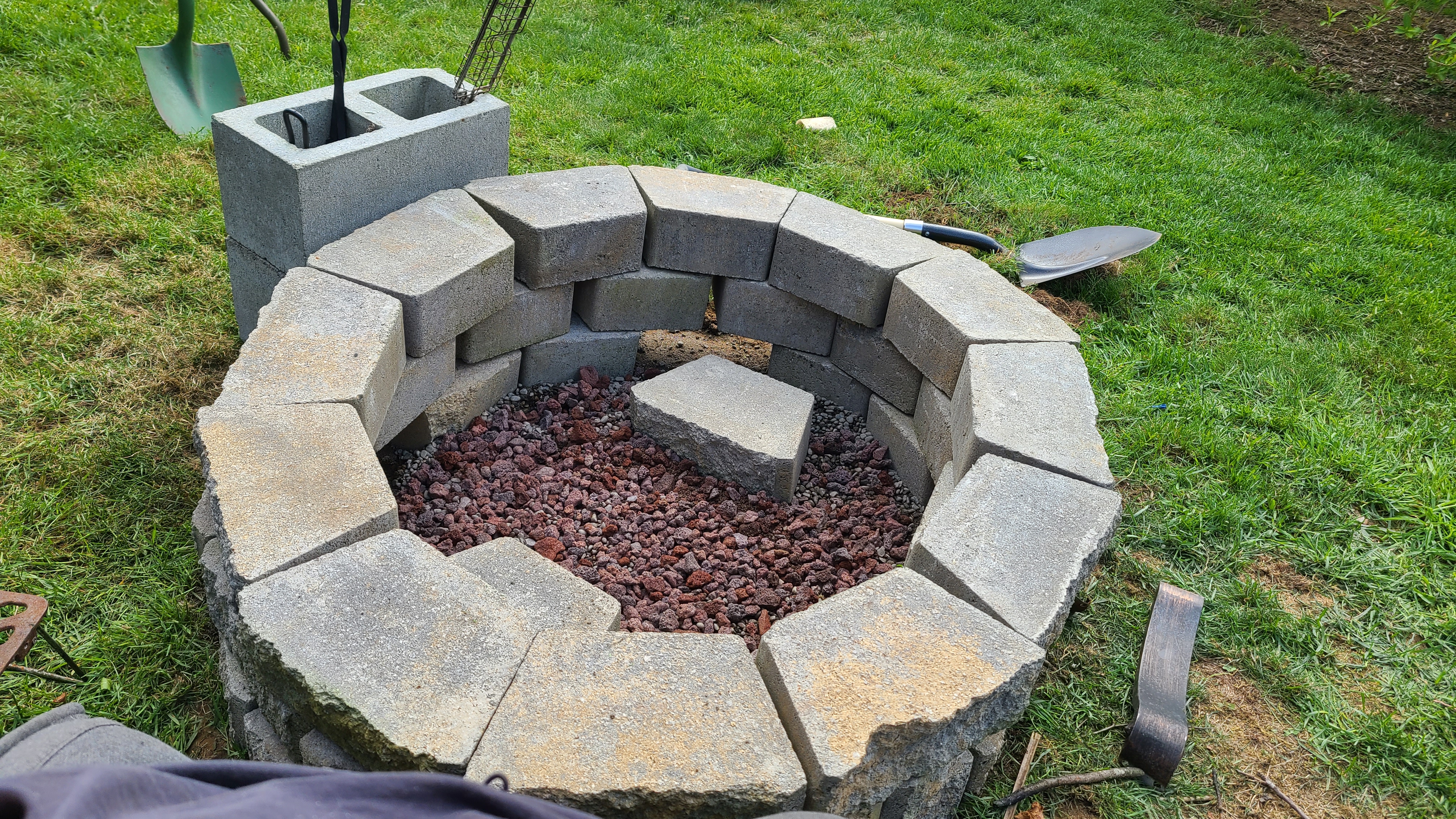
This is an account of how I built my really snazzy looking (IMO), smokeless, turbo air charged (OK, not turbo, but you can clearly hear the air rushing in! It's super cool! Err.. Hot, actually) fire pit, mostly sitting down, for about $110.00 +tax. 

First of all, I read a lot of instructionals, and watched even more videos on the topic of DIYing a smokeless fire pit. There were lots of good builds, good ideas, and aspects of various ones that I liked. Most of them were either out of my budget range, and/or required a level of labour that I can no longer do, nor afford to pay for, and a crazy amount of them assumed that "on a budget" means under $1000, or even "really cheap" builds for $300 -$500. 

The ones that were in the under $150 range were mostly ones made from repurposed junk and salvaged materials that were not the aesthetic I wanted, or they required the manual labour to locate, pick up, haul, load, and unload salvaged materials myself, which I'm just not able to do. As mentioned elsewhere in this blog, and known to many of y'all, I am disabled. My walking and standing time are seriously limited, and any serious lifting and working must be done seated. So, I needed something I could afford on a fixed income, DYI-able within my abilities and with very limited help, that still looked attractive, fit with the natural theme I wanted, and was easily usable for me as well. 

I've never been one to give up once I decide I want to make something happen, so, next came the adapt, improvise, and overcome phase! I figured out what elements were really important for what I wanted, and what was just extra work for bragging rights.

I was able to do the majority of the work seated. I did have some help with bringing me stuff, but I also could have used my scooter and my Gorilla dumping wagon (These things are AWESOME, BTW) to do the hauling stuff myself. It just would have added a bit more time to the job. That said, that would be true even if I were fully able bodied, so no net difference. 

I applied for a Dom Depot (AKA Home Depot. LOL) credit card, and got fifty bucks off the whole haul, plus free delivery, which helped a lot! You can get most of the supplies cheaper at Wally World, but with the $50 off, this was cheaper for me. Here's what I ended up with...


Supplies

Retaining wall blocks x34 ($81.00)

The main structure of the fire pit, obviously. Cheaper stones than these can be had, to make your overall project even more budget friendly, but I really liked these a lot, and they fit within my under $150 cap.


Sand ($7.59) (Available at WalMart for cheaper)

Insulates, to keep fire and heat contained, absorbs and helps distribute heat evenly, supports and helps even out the base stones, absorbs moisture, to help with drainage. 

Pea Gravel ($6.25) (Available at WalMart for cheaper)

Helps with drainage, heat distribution, and air flow. 

Lava rock ($14.29) (Available at WalMart for cheaper and a bigger bag)
Retains heat, to keep the fire pit hotter, longer, absorbs and helps distribute heat evenly, provides additional air flow for hotter and cleaner burning, and drainage.

Instructions

• Lay ring of 12 stones
• Mark around outside & move stones out of the way. 
• Dig out the marked circle 2-3 inches deep.


• Lay sand & level - Dump the bag out in the circle and spread it out with a rake or something. A metal rake like the one shown is best for this, IMO. 


• Replace the 12 stones, using sand underneath to level them as needed. 
• Remove 4 stones opposite one another (make sure remaining stones stay put!)


• Lay 2nd two levels, staggering stones for each layer.

• Optional, but recommended - Place two stones inside, to support wood for fire building and/or for supporting cooking grate. Having the stones there to prop a couple logs on over your tinder and kindling REALLY improves fast and easy fire starting! It will up your fire game for real. 

• Add pea gravel and level. 


• Add lava rock and level.


• Enjoy your new fire pit!.
 
• Optional step - I used a couple cinder blocks to make a holder for fire tongs, poker, skewers, etc. It works well.  
 
 • Another optional, but definitely recommend step - I built a matching bench, right up next to the pit, with some additional retaining wall blocks. It is perfect placement for building the fire whilst sitting, and some additional seating that looks great. 


Sunday, 5 February 2023

Kitchen/Pantry Bare Essentials ~ Where to Begin and How to Use Them (every day preps)

Most of this post was originally a part of a much longer one, originally posted near the beginning of the COVID-19 pandemic, but reverted to draft to revamp and post later. 

For everyone who says or thinks, "I wouldn't even know where to begin!", when it comes to home cooking, prepping, learning to save more money and be more self sufficient, etc, this post is for you!

 
This lists out basic things you need to have on hand in your kitchen in order to make a meal from just about anything - or even just from those things, in times of desperation. 

  I'm listing them in order of importance, so if you are on a REALLY tight budget, you know what things to prioritise and buy first. 

Please note that ALL of this assumes you have a source of potable water. If you don't have water, you won't need to worry about food, because dehydration will get you far faster than hunger. It doesn't even have to be bottled water from the store, if your municipal water is safe to drink! Just fill some empty milk jugs, soda/juice bottles, or whatever sealing containers you have with tap water and keep them on hand. Bottled water is further down on the list, but still included as an essential to get in your pantry or stored somewhere in your home when you are able.

1. Oil/Fat (vegetable oil, coconut oil, lard, bacon grease, shortening, butter, ghee... any kind of fat will do.)
2. Flour
3. Salt (Note: If you only have one kind of salt on hand, it should be iodized salt, for the necessary nutrients it contains.) 

These first three items are the most crucial, and, along with some water, can provide you with at least basic sustenance for far longer than you might think. We're talking weeks or more here. No lie.

Yeah, you are going to get unhealthy eventually, you won't be running any marathons, and you'll get really tired of it, but you won't starve. And with minimal add ins - whatever scraps or bits of pretty much anything, you can turn a few, random bits of things into an actual meal that will make whatever you have stretch as much as it needs to.

With nothing but flour, oil, salt, and water, you can make:

Tortillas
Frybread
Fried dough/biscuits
Naan/Pita/flatbread
Dumplings (no oil needed)
Sourdough starter and bread
Pasta (The linked recipe calls for olive oil, but ANY oil or fat will do)
Roux (the base for many sauces and gravies) and, with that, a simple gravy for your breads or sauce for your pasta.
pie crust
Hardtack (extremely long lasting survival bread rations)
And surely some other things that I am forgetting. Add in sugar and baking soda or powder to that, and the list more than quadruples!
But before we get to those extras, lets move on to a higher priority item...

4. Dry Beans

These are next on the list because they are a valuable source of protein and other nutrients that will help give you energy and keep you going, so you are able to function better and longer. 

Beans are pretty versatile too. You can make them sweet or savoury, and, depending on what spices or other things you toss in, can be cuisine from pretty much ANY part of the world! Even without extra stuff to put in it though, other than some salt, they will provide nutrition and calories, and can keep you going a lot longer than just the flour based stuff.

5. Milk Powder

Typical powdered milk, unless you get Peak milk, or similar higher end milk powder, admittedly does not taste very good for drinking, but it DOES provide calcium, vitamin D, protein, and other nutrients we get from dairy. 

This one is especially important if you have children in the home, but adults need dairy too; women more so than men. Besides the nutritional value, this also expands your food options a lot. 

With milk, you can turn your roux into white sauce to put on your pasta, or white gravy, AKA country gravy. You can add the milk powder into breads for texture, flavour, and extra nutrition, add it into beans/soups/etc to make them into a creamy dish. You can even use the hardtack recipe, rolled out thinner and cut smaller, to make cereal - hot or cold.

6. Sugar

Once you add sugar into the mix, you can sweeten things, and also speed up the process of culturing yeast for your bread. It's also good for adding some calories and quick energy to things.

7. Baking Soda
8. Baking Powder

These open up your baking quite a bit, as they provide leavening to things. So now you can add quick breads, biscuits, pancakes, and more.

9. Pepper

It is amazing what a difference in taste you can get with just adding some pepper to things! Other spices are great too, but if you can only get one type per shopping trip, start with pepper.

10. Spices/dried herbs

What and how many spices you decide to keep on hand is completely up to you, but I encourage building up your spice cabinet a lot, even if it is only one new thing per month! With different seasoning, you can turn even the simple fare with only the items above into a great variety of different, tasty dishes.

11. Dried veggie mix

This keeps pretty much forever, and will add lots more nutrition to your diet, along with more taste, texture, and variety, and will help keep you from getting scurvy. (NOT a joke!) One pound of dried veg mix will last a long time, takes up very little space/weight, and at under $12.00(USD), It's cheaper per prepared pound than canned stuff, which isn't as good, weighs more, and takes up a lot more space.

12. Rice

Don't get the instant/minute stuff! It doesn't keep as well, doesn't taste as good, has a weird texture, and costs a lot more per pound. Go with regular old rice. If you're getting long grain, parboiled is fine, just as long as it is ONLY parboiled. It's not really a survival NEED, but it's a very good way to make meals more diverse on the cheap, plus most rice you buy is enriched with minerals and other nutrients. It doesn't matter what kind(s) you get. Pick your favourite. Or get a few kinds and find your favourite. I keep several varieties on hand, cause I use them for different things. If I HAD to stick to only one, I'd go with basmati, but that's just me.

13. Peanut butter

A good source of quick protein, flavouring agent (mix into a basic roux and toss with pasta/ramen and a couple soy sauce packets - instant faux Thai noodles, or add into pancakes or biscuits for a whole new treat, for instance), sandwich filler, etc.

14. Steel cut oats

Rolled oats are ok, if you must, or if they are what the food pantry gives you, but they don't store quite as long and have less nutrition and texture. Again, not a dire need, but expands your options exponentially - Breakfast, baking, thickening, meatloaf or other ground meat filler to make it go farther, and much more. Home-made granola, anyone? The main ingredient is oats!  

15. Bottled Water
16. Canned Goods 

Of course, different varieties of a lot of these things are ideal to have on hand, but start simple and work up from there. 
 
If you can afford to stock up right away on bulk amounts of everything on the list, great! It saves more money in the long run, as long as you store everything properly. (More on that in an upcoming post)
If you can't, start with a 5 or10 lb bag of flour, a big-ish bottle of oil, and one of the big, pour spout cans of store brand salt, and add more from the list as you can, and start making things with them! 

Now, don't just keep it around for emergencies! 
 
Make these staples part of your regular routine. Cook at least one meal from scratch, or close to it per week.
Start by making something WITHOUT shopping for specific ingredients. You can do this!
Look in your fridge and cabinets and see what you have, and do an internet search for ingredients on hand recipes. 
Get used to cooking with your staples and what you have on hand, as well as trying out recipes that sound good (there are lots on this blog!), or making things you already know how to prepare.
 Get familiar with your kitchen and get comfortable figuring out what goes well together. 
Before you know it, you will be inventing all kinds of cheap, nutritious, and delicious new dishes (Write them down for when people taste them and beg you for the recipe!), and you'll be much better prepared for life's curveballs, and well on your way to building that well stocked larder, now that you have a good foundation!

For those who are in a lot more dire straits than others, or who find yourselves using the food bank or other food assistance program for the first time; Most food banks/pantries can help you with these staple items if you don't already have them and you ask, even if they aren't giving them out in the regular bags/boxes, and having those on hand will make it so much easier to make the regular, weekly items go much farther and turn into delicious meals, rather than random packages of stuff. 
The vast majority of my recipe inventions that make their way into this blog were a result of using whatever was on hand, on sale, in my bargain box of "imperfect foods", from my garden, or from the food bank, so I can tell you without a doubt that you can make great meals with almost anything and almost nothing! 
 

Next in this series: A properly stocked kitchen is the first step to a well stocked larder (every day preps)

Friday, 15 October 2021

My Comprehensive Preparedness Clothing list

 A lot of what's on this list is just my every day wear/go to items for different weather.

Yes, several of these items DO have cotton in them, but I have extensively tested and used them all, in all kinds of conditions, and can verify that they do a great job, even when wet, especially the ones listed as having "moisture wicking" properties in their item descriptions. Of course, wool is the better choice for socks, pretty much across the board, and for some other things like scarves and hats, but I'm allergic and can't test them, so this is what I use. 

Any links that go to out of stock items, you can just do a search for the same/similar thing. Not gonna do ALL the work for you! ;) 

This is a comprehensive, but not exhaustive list of everything, and some things don't have links to them, but should be easy to find. 

I'll try to keep it updated.

Base Layers

I remember when polypropylene was the brand new, cutting edge in base layers. How times have changed!

I am totally in love with the ECWCS Gen III stuff! It's all about layering, and takes up very little space. I have this stuff in my dresser and varying combos of them in my BOBs, Go Bags, and Get Home Bags (some of which double as regular trip luggage. Use and rotation, folks!!).


ECWCS Level-1/silk weight thermal underwear
Top: https://www.amazon.com/Rothco-Silk-Weight-Black-X-Large/dp/B002IAZFK0/
Bottoms: https://www.amazon.com/Rothco-Gen-Silk-Weight-Bottoms/dp/B002IASH0A/

ECWCS Level-2 thermal underwear
Top: https://www.amazon.com/gp/product/B0040RWIHW/
Bottoms: https://www.amazon.com/gp/product/B0040RQG1Q/

Carhartt Base Layer Sock Liner: https://www.carhartt.com/product/800105/force-base-layer-liner-crew-sock-3-pack

Pants

For pants, I mostly go with Propper TDUs. They come in regular canvas, lightweight, and shorts, in a variety of colours and sizes. They are seriously the most comfortable ones I've found, and even come in very large sizes. They come in women's as well, (and up to a size 24, ladies!), but I always get men's ones, because I have very muscular legs/calves, and no butt or hips, so the men's ones just fit me better. I also have sweatpants around in abundance, cause they are comfortable for just hanging out, quick to pull on, good for sleeping, etc. Anytime when I want to be more laid back and comfy than regular trousers allow. Same with the mesh shorts below.

Propper TDUs
Canvas: https://www.amazon.com/dp/B001EH62YG/
Lightweight: https://www.amazon.com/gp/product/B005PBWJQ2/
Shorts: https://www.amazon.com/gp/product/B00CYJIZZW/

Mesh Shorts: https://www.amazon.com/gp/product/B00719ZGNO/

Shirts

I mostly wear band shirts, or, around the house, oversize graphic t-shirts, some turned into tank tops for hot weather. But for Bugout/Go/Get Home bags, they have System Ts and the Mesh tanks. They are more versatile, nondescript, compact, moisture wicking, breathable, cool on their own and warm as layers, easy to hand wash and fast to dry, don't wrinkle, and the Ts can even look like a nicer shirt if worn under a jacket or something. They are great to have in any luggage and take up almost no space!

Propper System T-Shirt: https://www.amazon.com/gp/product/B00A3UUVWE/

Mesh Reversible Tank Tops: https://www.walmart.com/ip/Men-s-Active-Reversible-Mesh-Tank-Black-Gold-3X-Large/130759330
I like that these are reversible to a bolder colour if you want to be easily seen. Also instant "clean" shirt bonus. They're cheap and comfy.

Footwear

Under Armour Over-The-Calf Socks: https://www.amazon.com/gp/product/B001TOJM6O/   
These are great, a little longer and thicker than the MD ones, and don't have the mesh part, so are warmer. I wear these ones almost as much as the MD's, below.

MD Cotton Blend Over the Calf Compression Socks: https://www.amazon.com/gp/product/B00DM4NYVI/ 
These are my main go-to for hot weather. They have a kind of mesh area on the top of the foot that helps them breathe more, and are thinner than the UA ones. other than at the bottom, where there is a bit more cushioning. They are find most of the year, unless it actually is flat out COLD.

Dickies Cushioned Steel toe Boot Socks: https://www.walmart.com/ip/Dickies-Shin-Protector-Boot-Crew-Sock-3-pack/966451461
The ones I currently have look to be extinct, but pretty sure the above link is basically the new version of them. They are great for colder weather. I only have a few pair of them, as it doesn't really get THAT cold for very long here in the PNW.

LA Police Gear Tactical Boots: https://www.amazon.com/gp/product/B07SH9ZK38/
These are my secondary, everyday boots. My primary ones are western style work boots. They're both fine for working, but these are ones for more "dirty" or rugged stuff, when I don't want to mess up the nicer ones. They are VERY comfortable, and, while I can't test them for extended walking anymore, the vast majority of reviews were very positive there, and they are a great price.


Rothco Jungle Boots: https://www.amazon.com/gp/product/B000GXKHEA/

I have a pair of these attached to the outside of my ILBE rucksack that is my main bugout bag.They are intended to, ideally, be a spare pair of boots, but if I happen to not already be wearing boots and am unable to grab my others, it guarantees I have good boots.

Knockoff Crocs: https://www.amazon.com/Raoendis-Slippers-Sandals-Gardening-Outddor/dp/B0CTBS1HXW/
Here's one option, but put "rubber garden clogs" in a search and you'll find others. They are great to have around to slip into and out of when you don't feel like wearing your boots, but need some kinda shoes on. You could get real Crocs too, but I've had various knockoff brands for years, and they've all been at least as good as the real deal. Some better. I keep some in my vehicles and by the front and back doors of my house so they are always handy.


Outerwear

Leather jacket - Standard motorcycle leather: https://www.danielsmartmfg.com/ds731-mens-classic-side-lace-police-style-mc-jac

 It's kept well conditioned so it is nearly waterproof, and when worn with the zip out, quilted liner, it is pretty warm. More so with more layers underneath. Mine is roomy enough to allow for said additional layers. Also, most, if not all Daniel Smart leather jackets have one or two concealed carry/holster pockets built in. They are definitely great for comfortably carrying and allowing quick access to a Highpoint .45 ACP, Ruger 9mm, S&W .380, or a Colt .38 (all semi). I couldn't speak 100% for other makes, but with that variety, I am pretty certain that they'd be great for any pistol carry.


Carhartt Men's Arctic Quilt Lined Yukon Active Jacket J133: https://www.amazon.com/Carhartt-Arctic-Active-Jacket-J133/dp/B002G9U8BY/
Looks like this is no longer made, but I was able to find several used ones with a quick Google search. RUNS BIG!! Very sad it's discontinued, but worth getting one used if you want a great, warm, nearly indestructible coat. I have two, cause someone spilled a bunch of full strength bleach on my original one, and, while it still functions just fine, it looks like hell, so I got another. Here is my review: https://www.amazon.com/review/R154ZMNYY1FEUW/ref=cm_cr_srp_d_rdp_perm?ie=UTF8

And here is a Carhartt Yukon Extremes search to find similar jackets https://www.amazon.com/s?k=carhartt+yukon+extremes+jacket&crid=35X87B6878M9Q&sprefix=carhartt+yukon+jacket%2Caps%2C245&ref=nb_sb_ss_ts-doa-p_1_21


Mythical Blanket Hoodie: https://www.mythicalsociety.com/collectible/mythical-society-blanket-hoodie
This is an AWESOME, polar fleece, sherpa lined, oversize (ON ME!!) hoodie that is HELLA warm. Unfortunately, they are not available to the general public, but I figured I'd include the link anyway, in case you wanted to make your own similar item. This thing is SO warm, and it's easier to get full range of motion and relax in than an actual coat. Not waterproof at all, but something like it worn under a rain poncho.. Like one of the two below, perhaps, would do the trick!

Swiss Alpenflage Camo Wet Weather Gear Poncho: https://www.amazon.com/Military-Surplus-Swiss-Alpenflage-Weather/dp/B010C12SE2/
This is serious rain gear! I like this style better than the US Issue ponchos. It is freaking HUGE, but doesn't really take up much more packing space, and is better as an emergency shelter too, IMO. It stops biting cold wind and even seriously driving rain dead in its tracks, leaving me warm and dry underneath. To be clear, it won't keep you warm on its own. You need warm stuff under it. But it DOES keep the wind chill from touching you. I have one of these ihn my BOB and another in the house.

Lightweight Oversize Rain Poncho: https://www.amazon.com/gp/product/B07JQGHF5F/
This is not going to stand up to a monsoon, 24/7 outdoors in days of rain, or anything close to what the Swiss Army one does, but it still does the job quite well for keeping dry in an unexpected downpour when out and about, and folds down to super tiny size! Actually smaller than depicted in the photos, if you roll it before you put it in the bag and pop a couple ranger bands around it. I keep them in go bags, vehicles, and on my (mobility) scooter EDC. Big enough to cover a very fat person, some bags, and a small child (6 and under-ish) and stay dry. The extended bill thingy on the hood is a really great feature for keeping water from going inside and down the neck.

Head/Neck Protection

BC Hats Bac Pac Traveller Oily Australian Leather Hat: https://connerhats.com/products/bc-hats-bac-pac-traveller-oily-australian-leather?variant=31194378056

This is my every day hat. I've worn it regularly/daily for over 20 years, and it is still in great shape. I call it my "rain hat", or my "sun hat", depending on the weather. It shields me well from both. The original maker has retired, and it is unclear whether the company plans to continue/resume production of new stock, which is sad, cause they are hands (hats?) down, the best! There ARE a good number of well rated, similar hats on Amazon though, if you do a search for this hat.


Shemagh: https://www.amazon.com/dp/B00AHZC06U/
Everyone should have a shemagh or several! They are useful for ALL kinds of things besides the many ways to wear them. Google "uses for
shemagh", and see for yourself!

 
ECWCS Balaclava: https://www.amazon.com/gp/product/B000AN62RC/

Fleece Headband Ear Warmer: https://www.amazon.com/gp/product/B0180LZUK0/

Fleece Neck Gaiter: https://www.amazon.com/gp/product/B01715EUQG/

Combo Lightweight Gaiter/Scarf/Face Cover/Hat: https://www.amazon.com/gp/product/B07SX8NRQQ/
These come in a 4 pack, and are perfect to stow in jacket pockets, glove boxes, go bags, and basically anywhere. On their own, as a single layer (not bunched or folded much), they are a decent, not too hot, protective layer from dust, road grime (for riding), sand, and sun. folded over a couple times or bunched up, they can be a lot  warmer, especially when used as a base layer, and are also ultra versatile. I love 'em.

Rayon Fleece Watch Cap: https://www.amazon.com/gp/product/B00865NLSO/
I've got these in a few different go/other bags too. They are small, and toasty warm.

 Boonie Hat: https://www.amazon.com/Rothco-Adjustable-Boonie-Hat-Black/dp/B00JJWAJS8/
Tucks easily in a bugout/go bag for a warmer weather hat. My preference is my Aussie hat, of course, but backup!  

Mesh Head Net: https://www.amazon.com/Sea-Summit-Smallest-Insects-No-See-Ums/dp/B01MU00T0C/

This goes right over any hat with a  brim to keep from eating and being eaten by bugs. You REALLY want these, especially if you're near a water source. 


I'm sure I am forgetting plenty of items on this list, and I'll add in more as I think of them and/or change up my gear. If you have questions, suggestions, or think I missed a category, leave a comment and let me know!

Tuesday, 7 July 2020

You CAN afford a deep freezer, and you probably have room for one if you're not homeless

A deep freezer is worth its weight in gold; Maybe even worth its filled weight in gold!

Why?
Because when you have one, you can buy in bulk at massive savings, always have meal ingredients on hand without frequent trips to the store, have plenty of delicious, healthy, home cooked meals ready to heat and eat at pennies a serving, and never have to worry about running out of things, even if you can't get to the store (or the store shelves are all bare! Like... I dunno, maybe during a global pandemic?) for a while - even weeks or months at a time! Most properly packaged foods stored at 0°F or less (Home deep freezers will be somewhere around the -6°F range) can be stored indefinitely, without losing their original flavour or quality
(Freezer burn is the result of improper packaging, not deep freezing!).

There are a lot more details and reasons to add, but those are for other posts. This post is to help you figure out how you can reap those benefits, even on a budget (Yes, even in qualify for food assistance level poverty budget!) and/or living in tight quarters. 
It IS doable in most situations!

The first step is to figure out where you could put one. 
If you get an upright, it will take up about the same space as a small card table or easy chair/recliner. That isn't much, considering the benefits.
Be creative. It doesn't have to be in the kitchen, or even indoors, necessarily! It can go in a corner of the living/dining room, or bedroom, on a porch, patio, or balcony, in the yard, driveway, garage, in a in a storage closet/shed, etc. As long as you can run an appliance extension cord to it and there is around six inches of air space around it, it's all good! 
If it goes outside, it's a good idea to protect it from the weather, but not mandatory. If you are worried about it being unsightly or getting flack from management for having it outside/on your patio or balcony, you can easily and cheaply disguise it with a couple sheets of garden lattice and some 2x4s to make a frame, or you can even go extra simple, foldable, and portable by zip-tying the lattice pieces to one another. Put a couple potted, trailing plants (real or fake) on top, and it will look like a mini garden project. 

There are also a couple other DIY disguise ideas running around the internet. Here's one originally using a small fridge, but easily used for a freezer. There are custom made fridge wraps available, but you can get the same effect with a $20 shower curtain or two! 
Again, get creative and make it your own! You've got this. I have faith in you!

While chest style freezers are usually cheaper and slightly more energy efficient (in theory), an upright will be MUCH easier to keep organised, so you can get to things quickly, meaning it is not hanging open for extended periods of time, thus negating any energy savings. Since they take up less floor space, and you can store things on top of them too, that is like double space saving, and, using one is way better on your back!

A brand new one, if you get about the largest home model, will run you around $600-$800, which is a lot, BUT will easily save you at least that much in the first two years or less. 
If that price point is unattainable, even with saving up or (ugh!) renting to own (A freezer is about the only item I feel is worth going the rent to own route. That's how important I think they are.), look for dented/floor models to get significant savings on a new unit, go a little smaller, and/or check local want ads, Craig's List, Freecycle, and Buy Nothing to see if anyone is selling one at a price you can afford or even giving one away. You'd be AMAZED at the things people are willing to give away for free or sell massively cheaply.  


The bottom line is that, for lots of reasons, especially if you're poor, you can't afford NOT to do your best to get a deep freezer.

Thursday, 19 March 2020

SHTF, COVID-19 Style, and how being PROPERLY prepared makes a major difference

Of course, I had to eventually make a post about the whole, novel coronavirus situation. 

Be warned; 
I have abandoned a fair degree of tact for this post, because I feel it is warranted. 
If your little fee fees are easily triggered, offended, or otherwise fragile, you should probably close this tab right now and go back to your armchair social justice warrioring or playing Farmville. 
 
At a time when cool heads, reasonable and rational thought, and thinking through cause and effect in a logical manner is more important than ever, people are, in human fashion, and to put not too fine a point on it, losing their fucking minds!

We already know the grocery store supply situation, and the inexplicable toilet paper idiocy, so I'm not going to rehash it here, but some of the excuses and bullshit I am seeing just piss me off.

Even in "prepper" groups, I am seeing people self congratulating and patting themselves on the back for being able to do their "panic buying" before everyone else and/or in defiance of local government's please to avoid such things. 

Here's the thing. 
If you had to do ANY "panic buying", you were/are not prepared, and have become part of the problem.

Here are just a couple of the things people are saying, along with my responses to anyone who thinks that way...
I was smart enough not to pay attention to the government/media advice. They told people "don't panic buy... we have enough"
No, that is not smart. It is acting like a stupid, entitled asshole. 
Lucky for me I was 50% prepared before my panic buy.
If you had been truly prepared - had thought farther ahead and lived as though this sort of thing might come at any moment and with little to no warning (because it does) - then you would not have had to do a "panic buy" at all. That is the entire point of preparedness!
The government blames people like me because old people can't get food and toilet paper.
Yes. That is because you are to blame
It is the panic buying and hoarding en masse that disrupts the supply chain and causes the shortages. If you were ALREADY prepared, you would not be part of the problem.

Patting yourself on the back for not listening to officials telling you not to actively deprive everyone else of even the minimum they need to get by, just because you were not adequately prepared and now want to be greedy in a time of crisis is not something to be applauded.
 
Those of us who were already prepared have no reason to feel guilty, or to blithely announce that we don't feel guilty "because me me me", because we have in no way contributed to the shortages.
Because we have built our stores, over time, without unduly stressing the supply chain.
In fact, many of us are now in a position to help some of our neighbours who may have been genuinely unable to prepare for themselves. You know, like those "old people". 

Systematically stocking up, without exhausting supplies for others, and continually rotating stock over time, before there is a crisis is prepping. 
"Prepping" at the last minute when the shit is already hitting the fan is not prepping. It's the opposite of prepping, and exactly what causes situations to be far worse than they need to be.

This may seem like a harsh response, but it really is made with best wishes for everyone's future well being and usefulness to others, which, by the way, also becomes valuable currency in a SHTF situation.
 
I honestly hope this situation helps more people to learn these things for the future, so they can avoid being part of the problem.

Friday, 10 October 2014

The value of a well stocked larder (every day preps)

(Updated 2020.02.11)
 

Whether you live in a tiny apartment or trailer, a huge house, or anything in between, storing up food (and supplies) for the "lean times" is a big part of essential preparedness.

Being prepared isn't just about preparing for some major disaster and having to go into lockdown/bug in mode. It's also about being ready to deal with the hardships and unexpected wrinkles that occur in everyday life.
The trick is to expect anything, so you won't ever be taken by surprise when life throws you one of its little (or big) curve balls.

Let me tell you a little story...

As has always been my habit, I generally buy a bit more food and supplies than what is needed every time I go grocery shopping, and I purchase many things, including personal care and household sundries in bulk, especially when they are on sale cheap.
At one point, years ago, after I split with my ex husband, I ended up renting rooms in my house to 4 good friends, so I could still afford to live there. Of course, I had quite a bit of food stored up in the basement pantry and deep freezer, as well as extra bottles of shampoo and conditioner, bars of soap, toilet paper, diapers, baby wipes (my youngest was still a toddler), and other stuff that really needs to NOT run out, like, ever.
Even with all that extra food and supplies, I continued to do the regular shopping as though there was nothing, rotate out the older stuff and store away the new, and add more to the stockpile whenever I could.

The rest of my new household often scoffed at my habits, and told me I was totally going over the top. They shook their heads every time I got on anyone's case to not waste my food and supplies, or dig into the "excess" instead of buying their own, regular, monthly food and whatever, always refusing to accept any of the "but there is PLENTY" arguments.They had all kinds of funny quips at the ready, regarding my "crazy, survivalist" habits. It was all in good fun, but they weren't really joking. Neither was I.

Well, time came when we were all out of work for a couple months. Times were especially hard all over, and the food banks were pretty short on supplies too. Lots of people were living on half rotten potatoes, stale bagels, rice, beans, and not much else. People were willing to trade valuable (in better times) items for a couple bags of plain, white rice or dried beans, of which I already had more than enough, so could trade our share for all sorts of things that wouldn't go as far, but would add variety and more flavour and freshness to our diets. 
This era would later be known as "The Great Recession".

We did fine though. We had regular meals of good, healthy food every day. We didn't have to ration things, because there was enough to last a good 3-4 months before we hit the "mandatory rationing" cap. (for me, that is the point at which only 2 months of food/supplies remain without rationing). We didn't have to choose between paying for food and necessary items or housing and utility costs with what we could make doing day labour, because we were prepared.

Eventually, we all got back on our feet, and let me tell you; This time, when it was time to start replenishing the stores, EVERYONE was VERY much on board with my plans and system.

Anyone can fall on hard times for any number of reasons outside of their control!

How long will you be able to provide for yourself and your family if you suddenly lose your job, get injured and can't work, or some other unforeseen circumstance?

Don't guess! 

Take out the calculator (if you're reading this, you have one at your fingertips) and actually do the maths. Figure out how much food you need per day/week. Not just in terms of budget this time, but in terms of quantity. Now, start putting away extra food and supplies along with the money I hope you are putting away "just in case" (if you are able)!

Look for a future post with some tips on how to get that larder/pantry/storage shed, or whatever well stocked!

Here is one:

Kitchen/Pantry Bare Essentials ~ Where to Begin and How to Use Them (every day preps)